THE GLUE
Capillary bridges
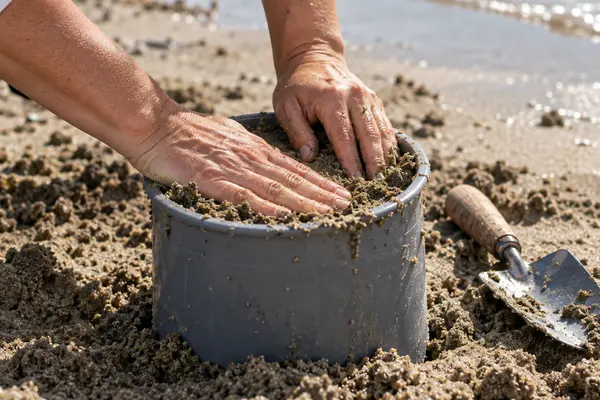
Water forms tiny bridges between grains. Their curved surfaces pull the grains together into a network, so the sand can hold a shape.
Check your mix doodlesculptor
THE PHYSICS OF SAND SCULPTING
Dry sand pours. Damp sand stands up.
≈ 1% water for the strongest sand
≈ 1% by volume Water for the strongest wet sand
The difference is tiny bridges of water between the grains. Physicists in Amsterdam found wet sand is strongest at about 1% water by volume, and worked out why a sculpture's base sets how tall it can go.
THE SHORT ANSWER
Grains don't stick on their own.
Water between them does the work.
THE GLUE
Water forms tiny bridges between grains. Their curved surfaces pull the grains together into a network, so the sand can hold a shape.
Check your mixTHE MIX
The 2012 study found the optimum strength at about 1% liquid by volume. Too much water destabilises sand, as seen in landslides.
See the numbersTHE SHAPE
A sand column fails by buckling under its own weight. Its maximum height grows with the base radius to the power 2/3.
Build betterA QUICK MIX CHECK
Pick a mix to see what the research says about how well it holds together. The bar shows how strong the sand is.
Based on Pakpour et al. (2012), Scientific Reports, and research on wet granular matter reported by Physics World. Percentages are liquid volume fractions in lab sand.
FOUR TIPS FROM THE LAB
These follow how the researchers built their test columns and what their model says makes sand stand taller.
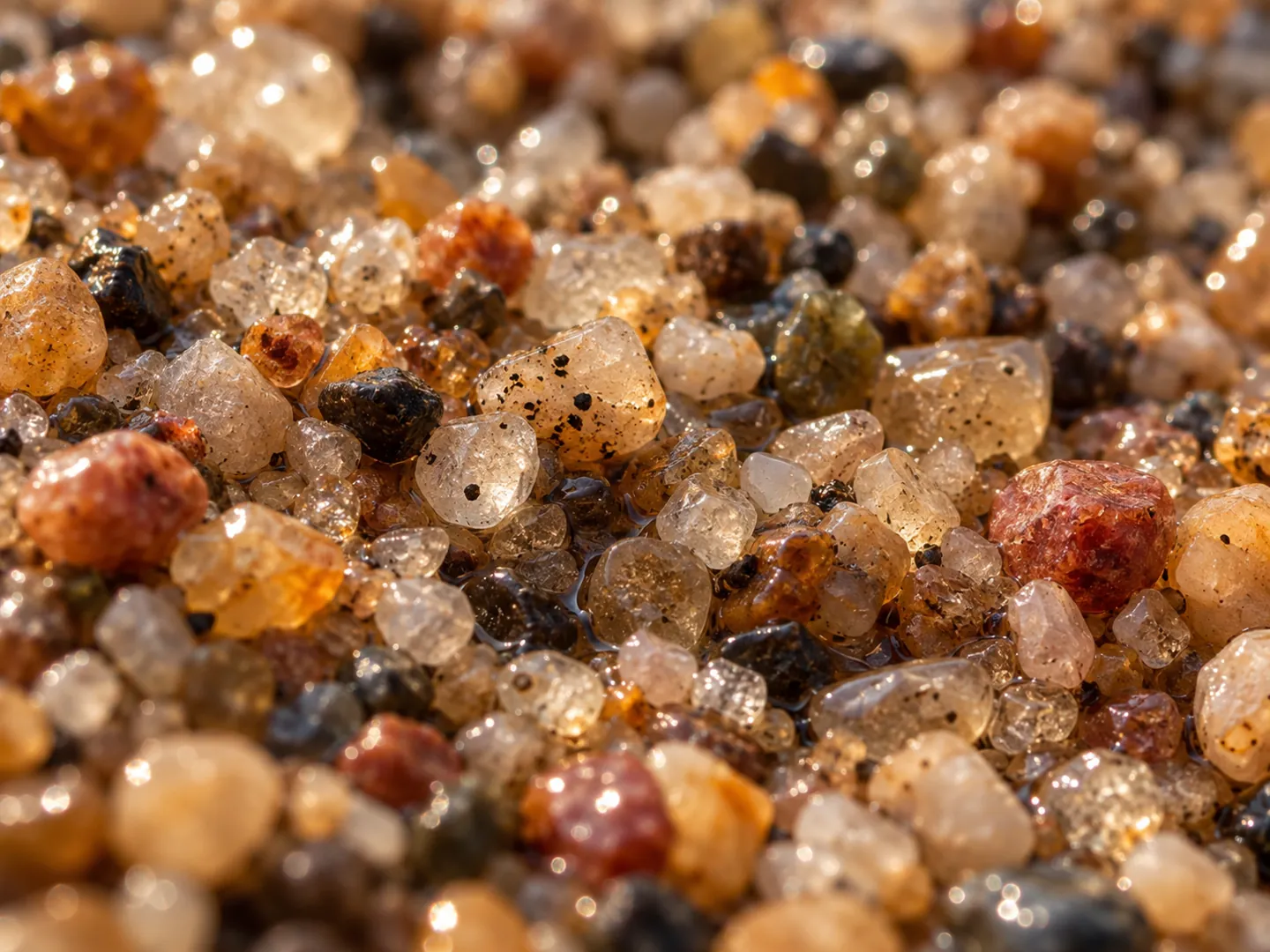
Less is more: the strongest mix in the lab was only about 1% water by volume.
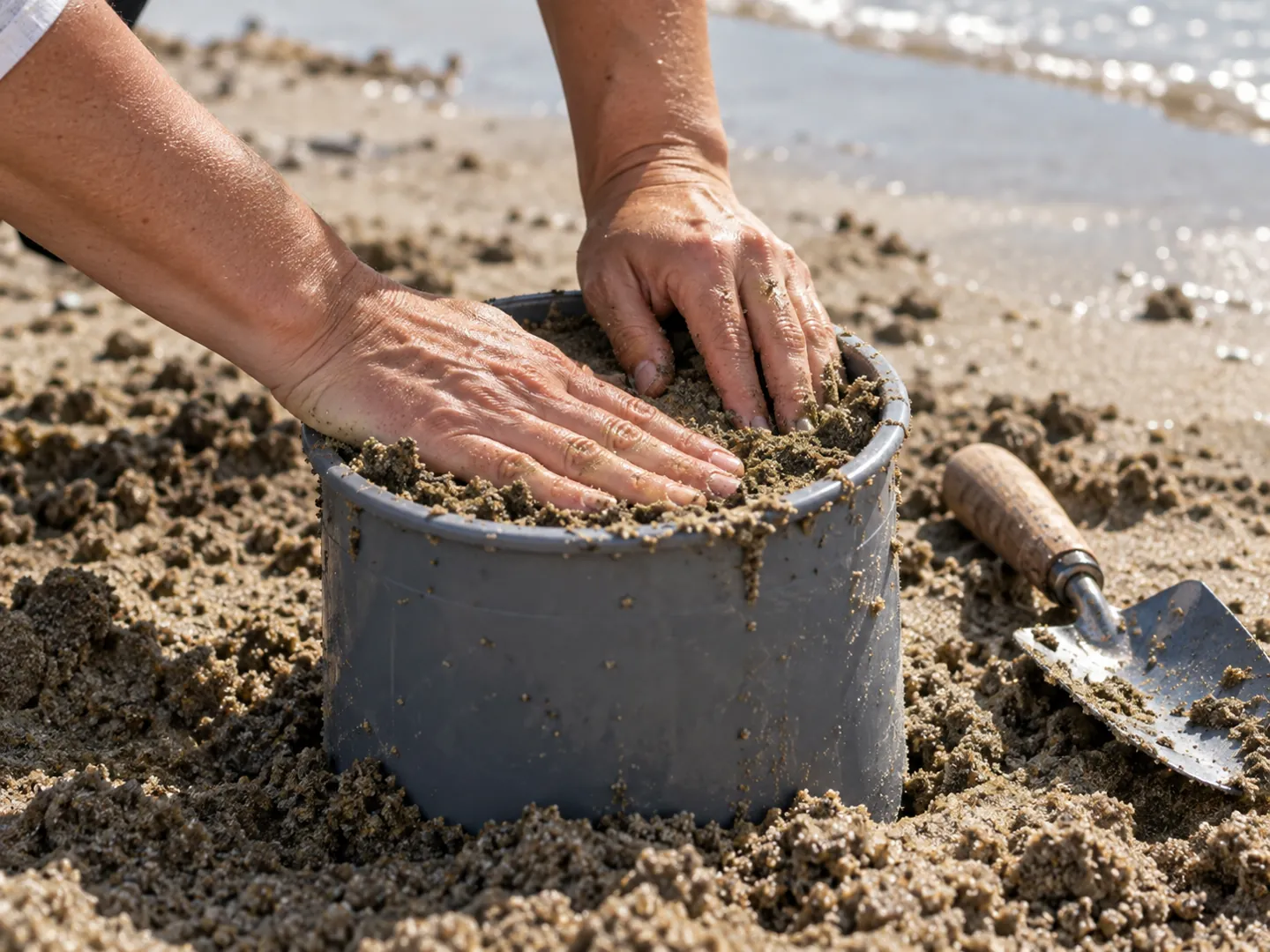
The team added sand in small portions and compacted each one by dropping a weight at least 70 times.
They packed sand into split PVC tubes, then carefully removed the halves to leave a free-standing column.
Height grows with base radius to the 2/3 power, so a tall tower needs a broader foot.
TWO NUMBERS WORTH KNOWING
The best mix,
and how tall it can stand.
≈ 1% by volume
Water for the strongest wet sand
Measuring the stiffness of wet sand, the Amsterdam team found optimum strength at a very low liquid volume fraction of about 1%.
BEST MIX · SCIENTIFIC REPORTS
≈ 2.5 m tall
A sand column 20 cm in radius
Using typical beach sand values, the theory says a cylinder of 20 cm radius could stand about 2.5 m, in good agreement with real sandcastles.
HEIGHT · SCIENTIFIC REPORTS
An older estimate put the maximum height of any sandcastle at roughly 20 cm whatever its base. The buckling model replaced it and matched lab columns up to 60 cm tall.
INSIDE THE SAND
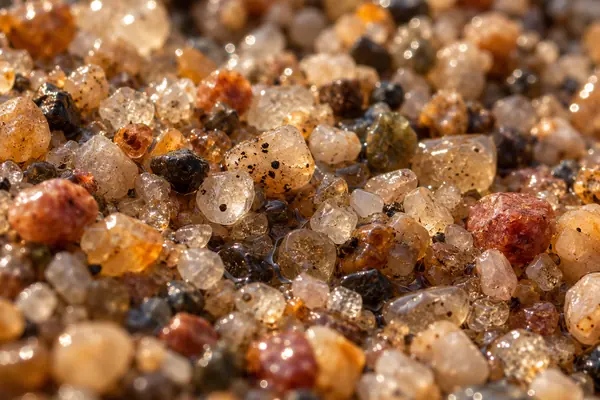
Using X-ray microtomography, Stephan Herminghaus and colleagues saw bridges grow and merge as water was added. Their explanation, reported by Physics World, is that bigger bridges wet more grain surface while each force weakens, so the two effects largely cancel.
Research since has gone further. A 2015 study in Physical Review E found that the way water clings to grain surfaces shapes how bridge volumes settle, and can lower the strength of wet granular beds.
Questions
Not much. A 2012 study in Scientific Reports found wet sand is strongest at a liquid volume fraction of about 1%. Too much water destabilises it.
Water forms tiny capillary bridges between grains. The curved water surface creates a pressure that pulls the grains together into a connected network.
It depends on the base. The study found the maximum height grows with the base radius to the 2/3 power; with typical beach sand, a 20 cm radius column could reach about 2.5 m.
Yes. The researchers note that compaction, which sculptors always do, increases the strength factor in their height formula. In the lab they compacted each layer with at least 70 drops of a weight.
Not with normal sand, because water destroys the bridges. The researchers built underwater sandcastles with hydrophobic sand, where air takes the place of water between grains.
Updated
ABOUT THIS NAME
doodlesculptor.com is part of the DoodleSale portfolio. It isn't in an auction right now, but you can ask about leasing it.